 blog
blog
Emergency Plumbing Repair in Palm Beach County
Table of Contents
- What Counts as an Emergency Plumbing Repair in Palm Beach County?
- DIY Emergency Mitigation Steps While You Wait
- Emergency Pipe Burst Repair: What to Expect
- How to Get an Emergency Plumbing Cost Estimate
- Why You Need a Licensed and Insured Plumber for Urgent Repairs
- Palm Beach County Plumbing Codes and Permits You Should Know
- Preventative Maintenance Checklist to Avoid Future Emergencies
- Frequently Asked Questions
Last Updated: September 30, 2026
What Counts as an Emergency Plumbing Repair in Palm Beach County?
An emergency plumbing repair is any plumbing failure that threatens property, health, or leaves a home without water or working drains. At East Coast Unlimited Home Services LLC, we define a true emergency the same way most insurance carriers do: active water where it shouldn't be, sewage backing up, or no water at all.
Situations That Require Immediate Attention
Call for emergency plumbing repair immediately when you see any of these:
- Burst or ruptured pipes spraying or pouring water
- Sewage backing up into tubs, showers, or floor drains
- No water pressure throughout the entire house
- Water heater leaking from the tank itself, not a fitting
- Gas line odors near a water heater or appliance connection
- Overflowing toilet that won't stop running
DIY Emergency Mitigation Steps While You Wait
Shut off the water first. Everything else comes second. A homeowner who knows where the main shut-off valve is can stop thousands of dollars in damage before a truck ever pulls into the driveway.
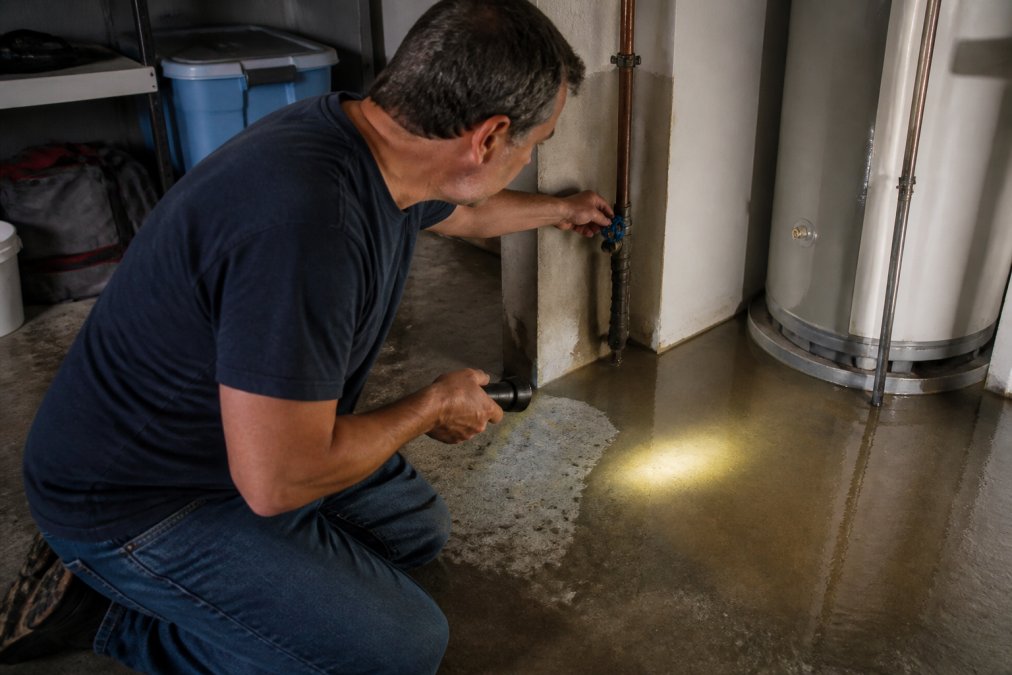
Here's the sequence that limits damage:
- Close the main shut-off valve. Usually near the street, in the garage, or at the water meter.
- Open the lowest faucet in the house to drain remaining water from the lines.
- Kill power to any flooded area at the breaker box, but only if you can reach it safely.
- Move furniture, rugs, and electronics away from the water.
- Document everything with photos for your insurance claim.
- Call a licensed plumber and describe what you see.
Emergency Pipe Burst Repair: What to Expect
Emergency pipe burst repair follows a predictable sequence: locate the break, isolate it, stop the flow, then restore the line. The repair itself often takes less than an hour. Finding the break is what takes time, and understanding why it takes time is what separates a calm homeowner from a panicked one.
Step 1: Isolate the Break
Before any cutting happens, the technician confirms the water is off at the main and then isolates the affected branch. On a supply line, that means closing the fixture shut-off or a zone valve so the rest of the house keeps water. On a drain line, it means confirming nothing is flowing into the damaged section. Skipping this step is how a small repair becomes a flooded room.
Step 2: Locate the Actual Failure Point
Water travels. A stain on the ceiling rarely sits directly under the break. Technicians use a few standard tools to narrow it down:
- Pressure testing, pressurizing the system and watching for the drop that reveals the leaking zone.
- Acoustic listening, a microphone or listening disc picks up the hiss of escaping water through drywall or slab.
- Thermal imaging, an infrared camera shows the temperature difference where water is pooling behind a surface.
- Video inspection, a camera snake confirms the location and condition inside drain lines, and shows whether roots or scale caused the failure.
Step 3: Cut, Replace, and Restore
Once the break is exposed, the damaged section is cut out and replaced. The method depends on the material:
- Copper is typically sweated (soldered) or joined with press fittings.
- PEX uses crimp or expansion fittings and is the fastest to repair.
- CPVC is solvent-welded and needs cure time before pressure returns.
- Galvanized steel is often repaired with a transition fitting to copper or PEX, because matching old galvanized is unreliable.
Step 4: The Part Most Homeowners Don't Plan For
The plumber's job ends when the pipe holds. The water damage is a separate problem, and it's usually the larger invoice.
- Extraction of standing water within the first 24-48 hours prevents the worst of the damage.
- Structural drying with air movers and dehumidifiers typically runs two to five days.
- Mold remediation becomes a real risk when porous materials stay wet beyond about 48 hours. The EPA's guidance on indoor water damage and mold outlines why timing matters here.
- Drywall, baseboards, and flooring are usually repaired by a different trade after the structure is dry.
What You Can Do While You Wait
If you've already shut off the main, open the lowest faucet in the house to drain the lines, move furniture and electronics clear of the water, and photograph everything before anything is moved or dried. Those photos are the backbone of an insurance claim, and they're much harder to reconstruct after the fact.
How to Get an Emergency Plumbing Cost Estimate
An emergency plumbing cost estimate should be given before work begins, not after. Any reputable provider will walk you through the likely range, explain what could change it, and get your approval before starting. The problem is that most companies won't publish a range at all, which leaves homeowners guessing at 2 a.m. while water is spreading across the floor.
| Emergency Type | Typical After-Hours Range | What Drives the Number |
|---|---|---|
| Burst supply line (accessible) | $250-$600 | Pipe material, fitting type, wall or slab access |
| Clogged main drain or sewer backup | $300-$800 | Line length, root intrusion, whether hydro-jetting is needed |
| Water heater leak (repair vs. replace) | $200-$1,800 | Tank age, whether the tank itself failed or just a fitting |
| Toilet overflow / wax ring failure | $150-$450 | Flange condition, subfloor damage |
| Slab leak detection and repair | $500-$2,500+ | Detection method, whether tunneling or rerouting is required |
- Time of day. Overnight, weekend, and holiday calls carry a premium, often 1.5x to 2x the standard rate. A Tuesday morning call and a Saturday midnight call for the same burst pipe are not the same invoice.
- Access. A pipe behind an open basement wall is a different job than one buried under a slab or behind finished tile. The repair itself may take an hour; getting to it may take four.
- Pipe material. Older galvanized steel and polybutylene lines fail differently than copper or PEX. A repair that works on copper may not hold on galvanized, and a partial replacement often makes more sense than a patch.
- Water damage scope. This is the line item most homeowners miss. The plumber stops the water. Drying, drywall, baseboards, and flooring are usually a separate trade and a separate invoice.
What to Ask Before You Approve the Work
- Is the estimate flat-rate or time-and-materials? Flat-rate protects you from a clock that keeps running. Time-and-materials protects the plumber from a job that turns out to be worse than it looked. Know which one you're agreeing to.
- What's excluded? Drywall repair, painting, flooring, mold remediation, and permit fees are the usual exclusions. Get them in writing.
- Is there a diagnostic or trip fee? Many companies waive it if you approve the repair. Ask.
- Will the technician show you the problem before quoting? A camera or phone photo of the actual break is reasonable to request.
For current pricing on your specific issue, request a quote directly. A written range beats a phone guess every time.
Why You Need a Licensed and Insured Plumber for Urgent Repairs
A licensed and insured plumber protects you in three ways: the work meets code, the insurance covers damage if something goes wrong, and the permit process stays clean. Unlicensed work can void your homeowner's insurance and create problems when you sell the house.
- Licensed means the state has verified training and competency
- Insured means liability and workers' comp are in place
- Permitted means the county has inspected and approved the work
Palm Beach County Plumbing Codes and Permits You Should Know
Most emergency repairs don't require a permit, but replacements and reroutes usually do. Palm Beach County follows the Florida Building Code, which governs pipe materials, venting, backflow prevention, and water heater installation.
Common permit triggers include:
- Water heater replacement (always permitted)
- Sewer line repair or replacement
- Repiping any portion of the system
- Backflow prevention device installation
- Any change to the drain, waste, or vent system
Preventative Maintenance Checklist to Avoid Future Emergencies
Preventative maintenance is the cheapest emergency plumbing repair you'll ever pay for. Most burst pipes, failed water heaters, and sewer backups announce themselves weeks in advance. The trick is knowing what to look for.
Run through this checklist twice a year:
- Test the main shut-off valve to confirm it still turns freely
- Inspect under every sink for slow drips or moisture
- Flush the water heater to remove sediment buildup
- Check the water bill for unexplained increases
- Look for rust-colored water or reduced pressure
- Have drains professionally cleaned if they gurgle or drain slowly
- Inspect exposed pipes in the garage and attic for corrosion
- Test sump pumps before storm season
Frequently Asked Questions
How quickly can a plumber arrive for an emergency repair?
Response times vary by location and time of day, but many providers offer same-day service and 24/7 availability. In Palm Beach County, a licensed plumber can often arrive within 1-2 hours for true emergencies like burst pipes or sewage backups. When you call, ask for a specific arrival window and confirm whether the dispatcher can give you the technician's name and estimated time of arrival.
How much does an emergency plumbing cost estimate typically include?
A proper emergency plumbing cost estimate should clearly outline what is included. Always ask whether the estimate is binding or if the price could change once the technician opens up walls or accesses the problem area.
What should I do while waiting for an emergency plumber to arrive?
Shut off the main water valve immediately if you have a leak or burst pipe. Turn off electricity to affected areas at the breaker box if water is near outlets or appliances. Move furniture and valuables away from the water, and use towels or buckets to contain the spread. Do not attempt to fix the pipe yourself unless you have plumbing experience. Document the damage with photos for insurance purposes.
How do I verify if a plumber is licensed and insured?
Ask for the plumber's license number and verify it through your state or county licensing board. In Florida, you can check credentials through the Florida Department of Business and Professional Regulation. Request a certificate of insurance showing general liability and workers' compensation coverage. A reputable company will provide these documents without hesitation and can give you references from recent local jobs.
Plumbing emergencies rarely announce themselves, and the difference between a quick fix and a full restoration often comes down to who you call. East Coast Unlimited Home Services LLC handles emergency plumbing repair, bathroom remodels, and residential repairs for homeowners across the area, with upfront estimates, licensed workmanship, and a team that treats your home like its own. Get started with East Coast Unlimited Home Services LLC and get your water back where it belongs.