 how-to
What to Do After a Pipe Bursts: 7 Steps to Stop Damage
Table of Contents
- Step 1: Shut Off the Main Water Supply
- Step 2: Kill Power to Wet Areas and Avoid Electrical Hazards
- Step 3: Drain the Pipes and Find the Leak Source
- Step 4: Document Everything for Your Insurance Claim
- Step 5: Water Damage Cleanup After a Pipe Bursts
- Step 6: Call an Emergency Plumber for Burst Pipe Repair
- Step 7: Burst Pipe Repair Cost and What to Expect
- What Not to Do After a Pipe Bursts
- Frequently Asked Questions
Last Updated: October 7, 2026
Step 1: Shut Off the Main Water Supply
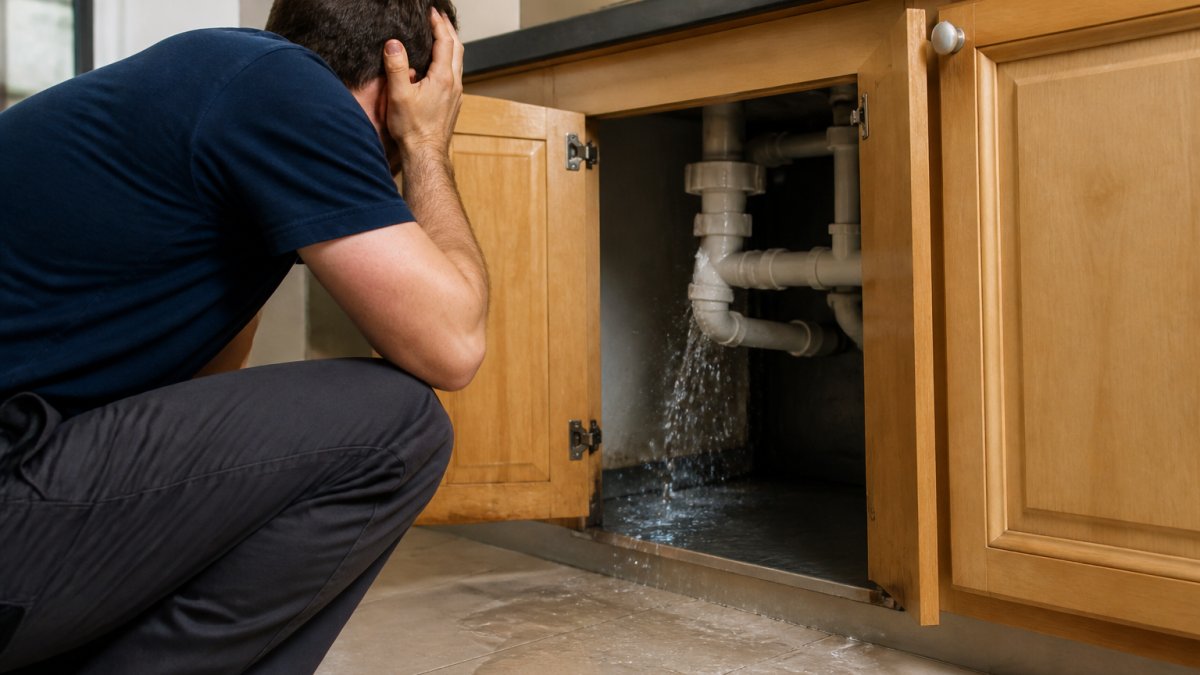
A burst pipe can release several gallons of water every minute, so shutting off the main water supply is the first move after pipe bursts.
Here is how to shut off water to house systems in a hurry:
- Find your main shutoff valve. It usually sits near the water meter, in a basement, garage, or utility closet.
- Turn a gate valve clockwise until it stops. These have a round wheel handle.
- Turn a ball valve a quarter turn. The handle is a lever, and it should end up perpendicular to the pipe.
Test your valve before an emergency. A valve that has not moved in years can seize shut. EPA guidance on water shutoff and home water systems
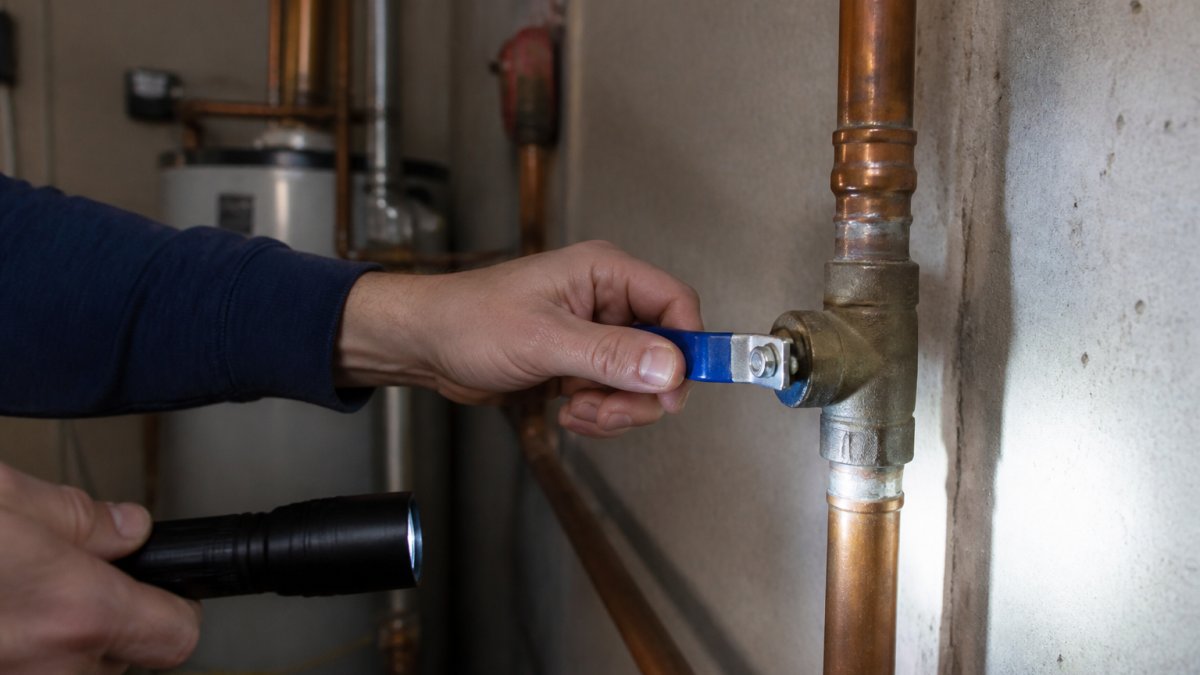
How to Shut Off Water to House: Gate, Ball, and Street Valves
Gate valves use a wheel and close slowly. Ball valves use a lever and close fast. The street valve sits outside your home and needs a curb key. Know which one you have before water is pouring through your ceiling.
Step 2: Kill Power to Wet Areas and Avoid Electrical Hazards
Water and live electricity are a deadly pair, and a burst pipe can put water in places you would never expect: inside walls, across a basement floor, or dripping onto an electrical panel.
First, answer three questions from a dry, safe spot:
- Is water touching or within a few feet of outlets, appliances, a breaker box, or a fuse panel?
- Do you smell gas, hear hissing, or see a damaged gas line near the leak?
- Is the water visibly dirty, gray, or sewage-tinged?
If you answered yes to any of them, stop and follow the matching path:
- Electricity in play: Do not walk through standing water. Do not flip a breaker that is wet, sparking, or buzzing. Leave the area, keep everyone out, and call your utility or 911 from a dry location. Only shut off power at the panel if you can reach it on a completely dry path and the panel itself is dry.
- Gas suspected: Do not flip any switch, use a phone, or strike a match near the area. Leave the home immediately, then call your gas utility or 911 from outside. A burst pipe and a gas leak together are an evacuation event, not a DIY moment.
- Contaminated water: Water from a sewage backup, washing machine discharge, or toilet supply line can carry bacteria. Treat it as a health hazard. Wear gloves and boots, keep children and pets away, and do not use a shop vac or household fan in the affected area until the water is classified and cleaned properly.
If all three answers are no and the path to your panel is dry, you can shut off power to affected circuits:
- Flip only the breakers feeding wet rooms, not the whole house, unless water is widespread.
- Stand on a dry surface and keep one hand free.
- If the breaker will not reset or trips again, leave it off and call an electrician.
When to call 911 versus a utility versus a pro:
- 911: Sparks, smoke, a gas smell, or anyone injured or trapped.
- Electric utility: Water has reached the meter, service line, or outdoor panel.
- Gas utility: Any gas odor or damaged gas appliance near the leak.
Once power is confirmed off and the area is safe, you can begin draining pipes and assessing the leak. Until then, treat every wet floor as live and every wet outlet as energized.
Step 3: Drain the Pipes and Find the Leak Source
Draining the pipes lowers the pressure and slows the leak. Open the lowest faucet in the house first, then the highest faucet. This lets air in and water out.
Then flush every toilet once to empty the tanks. Next, walk the house and look for the leak source:
- Check ceilings for bulging or brown stains.
- Look under sinks and behind appliances.
- Feel along baseboards for cold or damp spots.
Mark the leak source with tape so you can show your plumber and your insurer. American Red Cross home water damage safety guidance
Step 4: Document Everything for Your Insurance Claim
Your insurance claim lives or dies on documentation, and the window to capture good evidence closes fast once cleanup starts. Treat the first hour after the water is off as your evidence-gathering window. Most homeowners policies require you to prove the loss, show you mitigated further damage, and provide a written inventory. Here is a workflow that covers all three.
1. Capture the scene before you move anything
- Take wide photos of each affected room from the doorway, then mid-room, then close to the damage.
- Shoot close-ups of the leak source, the failed pipe section, and any stained ceilings or buckled floors.
- Record a slow walkthrough video with narration: room name, what is wet, and how deep the water was.
2. Build a damaged-item inventory
- List each item with brand, model, approximate age, and replacement cost where you can find it.
- Group by room so the adjuster can match items to photos.
- Note items that were already worn or damaged before the loss. Adjusters depreciate, and honesty here protects the rest of your claim.
3. Keep a mitigation and communication log
- Write down the date and time you shut off water, called a plumber, and started extraction.
- Save every receipt: wet vac rental, fans, dehumidifier, towels, hotel stay if you relocate, and any emergency supplies.
- Log every call with your insurer: date, time, representative name, and what was promised.
4. Understand what your policy likely covers
- Most homeowners policies cover sudden and accidental water damage from a burst pipe, including pipe repair and resulting damage.
- Many policies exclude damage from neglected maintenance, freezing if the home was unheated, or gradual leaks.
- Mold coverage is often capped or excluded. Ask your adjuster in writing what your mold limit is before remediation begins.
- Additional living expenses may be covered if the home is uninhabitable. Ask early, not after you have paid out of pocket.
5. File and follow up
- Report the claim as soon as the water is off and the area is safe. Delays can weaken your claim.
- Ask for the claim number and the adjuster's direct contact in the same call.
- Request a written scope of loss after the adjuster inspects. Compare it line by line to your inventory.
- Get at least one independent repair estimate if the insurer's number seems low.
Step 5: Water Damage Cleanup After a Pipe Bursts
Water damage cleanup after a pipe bursts starts with removal, not drying. Standing water left for more than a day invites mold and rot. Here is how to triage by material and time:
| Material | First 24 Hours | After 48 Hours |
|---|---|---|
| Carpet | Extract and lift | Likely replace |
| Drywall | Cut and dry | Replace wet sections |
| Hardwood | Dry fast | May cup and warp |
| Concrete | Mop and air | Usually fine |
Use a wet vacuum or towels to pull up water. Move furniture and damaged belongings off wet floors. Run fans and a dehumidifier to dry affected rooms. Open windows if the weather is dry and warm.
If wet drywall or ceiling damage covers a large area, call a restoration professional. Hidden moisture behind walls causes mold you cannot see.
Step 6: Call an Emergency Plumber for Burst Pipe Repair
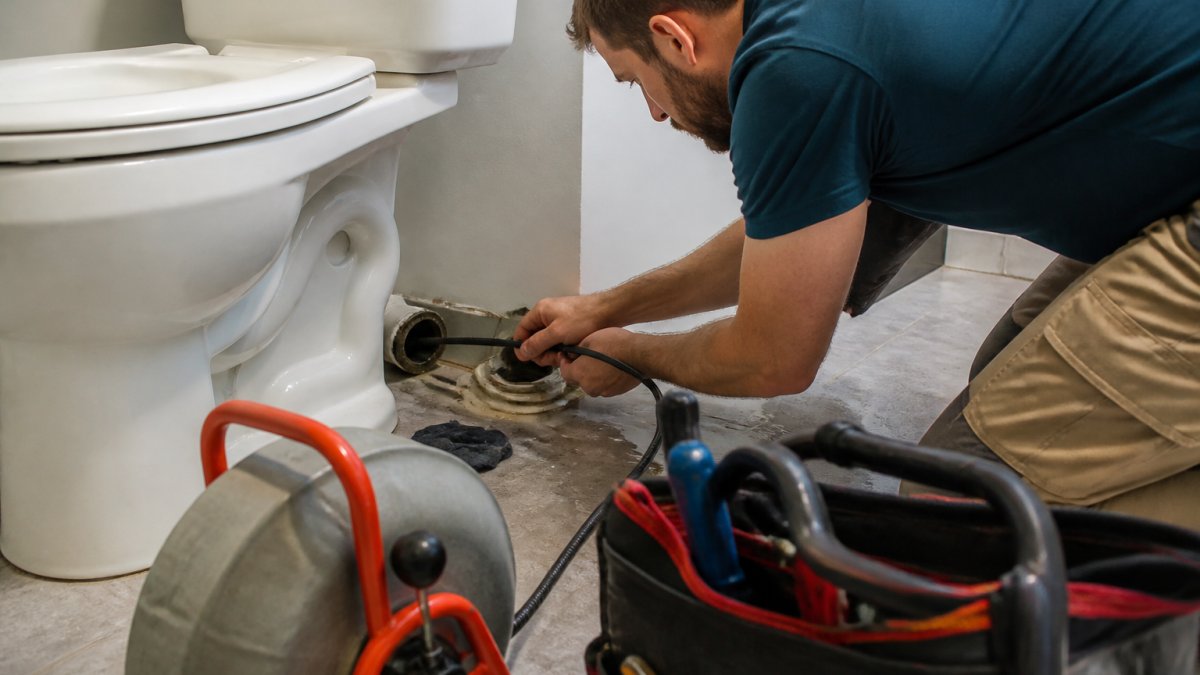
An emergency plumber for burst pipe repair handles what you cannot: cutting out the failed section, soldering or fitting a new pipe, and checking the rest of your plumbing system. Call as soon as the water is off and the area is safe.
- Shut off the water and power before they arrive.
- Clear a path to the leak.
- Share your photos and your list of damage.
- Ask about a temporary repair if a full fix must wait.
A temporary repair sleeve can stop the flow on a small split until a permanent fix is possible. It is a stopgap, not a solution.
Step 7: Burst Pipe Repair Cost and What to Expect
Burst pipe repair cost depends on the pipe location, the material, and how much water damage occurred.
Pricing depends on the scope of the work, the parts needed, and whether water damage cleanup is part of the job.
For a real figure, request a quote and get the scope in writing. Ask what is included: pipe repair, drywall, and cleanup are often separate line items.
What Not to Do After a Pipe Bursts
The wrong move after pipe bursts can cost more than the leak itself. Avoid these:
- Do not ignore the water and hope it dries. It will not.
- Do not use a shop vac near standing water if power is still on.
- Do not pour drain cleaner into the broken pipe.
- Do not crank up the heat to dry a room. Fast heat can crack wet drywall and warp flooring.
When in doubt, call a pro. A fast, safe response protects your home and your claim.
Frequently Asked Questions
How urgent is a burst pipe?
Treat it as an immediate emergency. A single burst pipe can release several gallons of water per minute, and within 30 to 60 minutes that water reaches drywall, flooring, and furniture. Mold can begin growing on wet materials within 24 to 48 hours. Shut off the main water supply first, then cut power to wet areas, and call a plumber the same day.
How expensive is it to fix a burst pipe?
Burst pipe repair cost depends on the pipe material, where the leak sits, and how much wall or floor has to be opened to reach it. A short section of accessible copper or PEX is a smaller job than a pipe buried behind tile or inside a slab. Because pricing depends on the scope of the repair, ask for an on-site assessment and a written quote before work starts.
Can you fix a burst pipe on your own?
You can slow the leak with a repair sleeve or pipe clamp as a temporary repair until a plumber arrives, but that is not a permanent fix. A proper repair means cutting out the damaged section and joining new pipe, which requires the right tools and material match. Attempting a permanent repair yourself risks a second burst and more water damage.
How do you dry out a house after a pipe bursts?
Start water damage cleanup by removing standing water with a wet vacuum or pump, then move furniture and damaged belongings off wet surfaces. Run fans and a dehumidifier continuously, and pull up wet carpet where possible. Wet drywall, insulation, and ceiling damage usually need to be cut out, since trapped moisture leads to mold. Call a restoration professional if the affected area is larger than a small room.
A burst pipe is a race against time, and the first hour matters most. East Coast Unlimited Home Services LLC handles emergency plumbing, water damage cleanup, and residential repairs for homeowners across Palm Beach County. Our team offers reliable residential maintenance, high-quality home repairs, and professional bathroom and shower remodeling when the damage reaches beyond the pipe. Get started with East Coast Unlimited Home Services LLC and protect your home from the first drop.